
- Cost Comparison
- Onboarding
Why does a personal injury virtual assistant cost so little?
What moves to a PI intake seat is decided by the standard, not the rate.
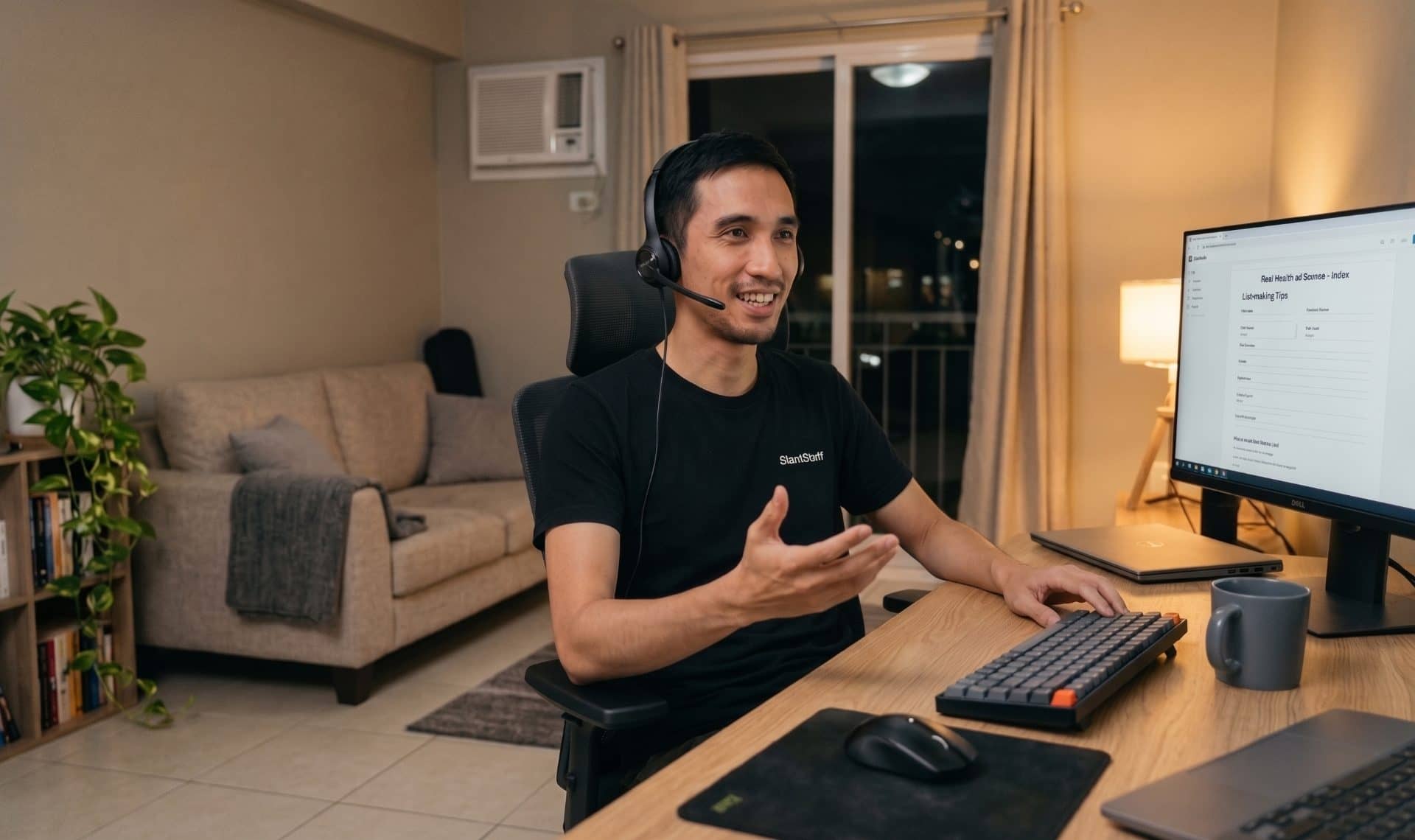
A personal injury virtual assistant cannot tell you which intake call is worth a file. That is not a limitation to route around. It is the line that decides what moves to the seat and what stays with the attorney who signs. Records requests over here, case value over there. The sort reads clean until one item on the list carries a judgment call nobody wrote down. The task name is not the test.
What does a personal injury virtual assistant actually do?
A personal injury virtual assistant owns the parts of a file that have a checkable output. Somebody else already decided what correct looks like. The assistant produces it on schedule, and anyone can tell at a glance whether they did. The work is unremarkable when you list it out. That is the point, and it is also why it moves.
- Logging intake calls into the case management system on a set script
- Sending medical records requests and chasing the providers who ignore them
- Building the treatment chronology from records already in the file
- Tracking liens, bills and correspondence dates
- Calendaring deadlines and sending clients status updates on an approved template
None of that is small work. In a PI practice the file that stalls is usually waiting on a records custodian rather than on a lawyer's thinking. Somebody has to chase it, week after week, and in most firms that somebody is already carrying a caseload. The chase gets dropped first because it is the least interesting thing on anyone's desk. It is also the thing sitting between a treating physician's chart and a demand package. Unglamorous work moves settlement dates.
Chasing is a job.
The test for what moves to the seat and what stays
Sort the work by one test: can it be completed correctly by someone who does not know what the client wants? A records request either arrived or it did not. A chronology is right, or it has a gap you can point at. Whether the demand goes out this month depends on what the client wants out of the case. That one never moves, and seniority in the seat does not change it.
Firms write the role as a list of duties and hire whoever priced lowest against the list. Half the items on it carry an unwritten judgment call. The person who inherits that call is the partner who bought the seat to get free of it. We have watched firms hand over the intake list and inherit the judgment call anyway. That is not delegation. That is a guess with a timesheet.
Who supervises a personal injury virtual assistant?
Everything the seat produces is an input, and a licensed attorney reads it, adopts it and signs it. The supervision a lawyer owes over a non-lawyer assistant under Model Rule 5.3 does not change with geography. It is the same obligation whether that assistant sits in the next room or ten time zones away. A remote seat does not thin the duty out by a single hour. The signature carries it rather than the seating chart, which is why the arrangement lives or dies on who reads. I think this is the piece that gets priced last, and it decides whether any of it holds.
An assistant who is never corrected is not supervised, and trust is what quietly takes the place of review. The two look identical from a partner's desk until something in a file is wrong. Your intake script has never been cross-examined, and neither has the chronology template every file was built from. The same gap repeats in file after file because the standard it is measured against lives in one partner's head. Supervision is not a status call on Friday. It is somebody reading the output against a written standard, on a schedule, with corrections that land.
Why the seat does not clear the attorney's desk
Outsourcing changes the cost of producing work and not the cost of reviewing it. Capacity is both halves, and the second half is the one nobody buys. Add an intake seat and more records land, more chronologies get built, more calls get logged into the system. The reading still happens at one desk, at that person's rate, in the hours they have left. None of the new work arrives pre-read. That is the half I would model first, before I modeled a single dollar of the saving.
So volume rises and throughput sits exactly where it was before the hire. The firm feels busier and the billing lands about the same. The seat is doing exactly what it was hired to do. It works. Just not on the file you were worried about. Count the weekly hours your named reviewer genuinely has for someone else's output before you count anything else.
That number is the ceiling.
What the monthly rate tells you, and what it hides
Rates are checkable and capability is not. A managing partner who has been sold offshore staffing once already is right to weight the number he can verify. Most staffing agencies charge $1,500 to $2,000 a month all in for a mid-level offshore paralegal. That reads well against a fully loaded US paralegal at $85,000 to $105,000 a year. The arithmetic is not wrong, and I have never argued that it is. It is just not a price for the same thing.
Of that monthly fee, the worker earns roughly $470 to $615. The firm paying the bill never sees the split. That matters, because the split is what decides whether the person stays past month eighteen. Ramp is two to four weeks on providers' own numbers, so nobody clears a backlog in week one. And the supervision hours are paid at an attorney's rate either way. None of that is on the invoice you are comparing.
The rate you can verify is a fact about housing costs somewhere else. It is not a fact about what the seat will clear. Pick one task on your intake list, write down what correct looks like, and hire against that. If nobody can write it down, the task was never the assistant's to take. The standard moves the work, not the rate.
People also ask about this
Can a personal injury virtual assistant speak to clients?
What should a firm write down before the assistant starts?
Is an intake seat cheaper than hiring a paralegal locally?
Related Topics


Recommended Readings






Build Your Offshore Team Risk-Free
No upfront cost. Fill roles in 14 days. Pre-vetted, not just pre-screened.