
- Cost Comparison
Outsource legal research, but review hours never disappear
Per-project rates look fine on one invoice, terrible over four matters. What nobody prices: the ramp.

Firms buy legal research by the project and pay for the ramp on every one of them. A per-project rate is verifiable, and that is exactly why the model keeps getting bought. You can read the quote. You can compare it against a contract attorney's hourly. What you cannot read on that invoice is the second thing you bought, which is a stranger learning your client, your forms, your citation conventions and the partner's habits. That ramp gets paid again on every project, while a steady researcher pays it once.
Does outsourcing legal research actually save money?
Outsourcing research saves money on the hour and loses it on the year, and the reason is the line nobody puts on a quote. Every per-project engagement opens with a stranger at zero. You brief the matter. The style guide goes over, or it does not, and the memo comes back formatted wrong. Then somebody explains that this partner wants the adverse authority up front, not buried at the bottom. That is four to eight hours of your people, and it is not on the invoice because you paid it in your own time.
Run that across five matters in a year and you have bought the same ramp five times. The rate did not move. Your cost per usable memo did.
The comparison firms run is per-project rate against a full-time salary, and the rate wins every time. It wins because the salary number includes everything and the rate number includes almost nothing. The comparison a firm chooses decides the answer before the math starts.
The saving only holds if the ramp sits inside the number, and it usually does not.
What the per-hour quote leaves off the page
I have never seen a research quote carry the two lines that decide what the work actually costs. They are not the vendor's to sell, so they land on you unpriced.
- Ramp. The brief, the forms, the citation rules, the partner's preferences. Charged to your people at your people's rates, every engagement, forever.
- Review. The attorney read that turns a memo into something the firm will stand behind. Drawn from the most expensive person in the building.
Hourly, per-project, retainer and subscription are four ways to price the same thing, which is production. None of them touches the other two. A vendor that halves your production cost and doubles your volume has moved your bottleneck rather than removed it, because the reviewer's week did not get longer.
Clio's legal trends reporting tracks how firm operations have shifted year over year, and the administrative burden partners carry keeps showing up in it. Research briefing is that burden wearing a billable coat.
Both lines get paid by the firm, in hours that never reach a bill. Every engagement, at partner rates.
When per-project research is the right answer
Sometimes it is, and the case for it is stronger than the steady-seat argument admits. A firm with three research questions a year, each in a different practice area, gains nothing from continuity. There is nothing to compound. The forms differ, the client differs, the body of law differs, and a researcher who learned your employment matter is a stranger again when the construction defect question lands. Specialized one-off questions are also where a named expert beats a generalist who knows your house style. Paying the ramp four times a year is cheaper than paying for a seat you cannot fill.
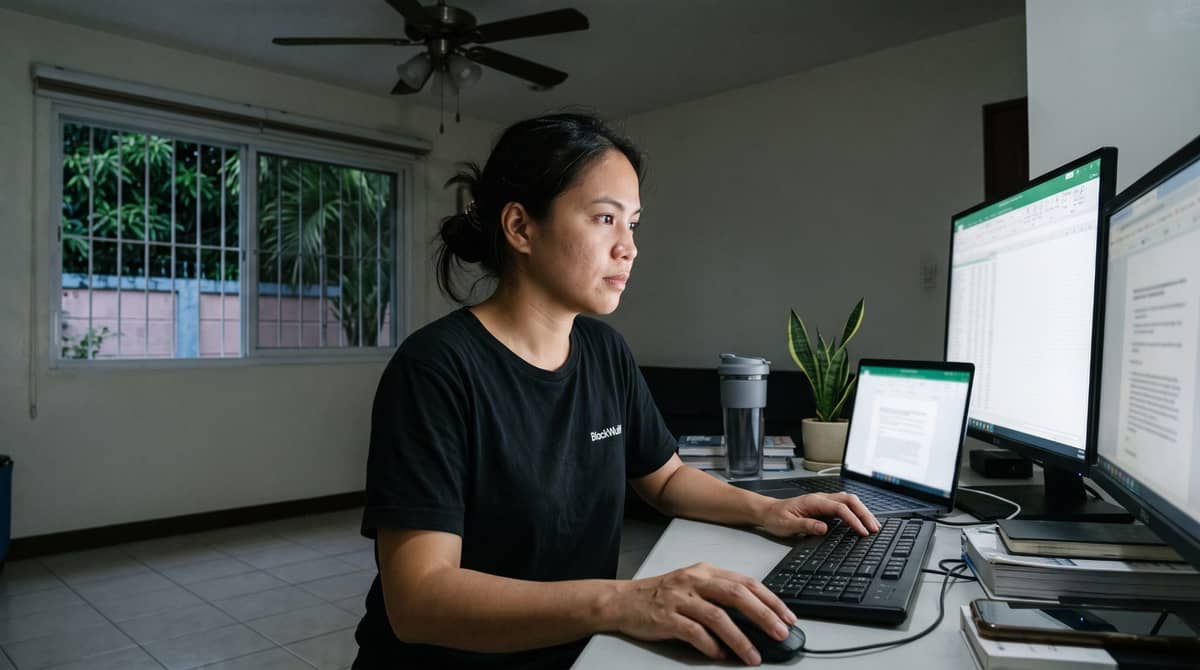
But the firms using per-project are mostly not those firms. They have recurring research demand in two or three areas and are buying it in unconnected pieces because that is how it was first bought. The contrarian read is not that per-project pricing is bad. It is that most firms using it have irregular buying habits rather than irregular demand, and those are different problems with different fixes.
Count last year's research engagements and sort them by practice area. The distribution tells you which of the two problems you have.
How do you maintain quality control over outsourced legal research?
Quality control on research is a written standard applied before the first question goes out, not a review cadence bolted on after a bad memo. Every article on this topic says QC matters. Almost none say what it looks like, so here is the version that survives a rotating bench.
- Write the memo standard down. Length, structure, whether adverse authority leads, which citation format, how uncertainty gets flagged. Criteria held in one partner's head cannot be handed to anybody.
- Run the first engagement on a closed question you already answered. You know the right answer, so the trial grades the researcher instead of grading your own uncertainty.
- Name the reviewer and count their weekly review hours before you scope anything. That number, not the vendor's rate, sets what the arrangement can produce.
- Log every escalation in the first month. Each one points at something you never wrote down, and a stronger researcher will not close it.
Notice that three of those four are work on your side of the table. A vendor cannot supply a standard you have not stated, and a per-project bench cannot remember one you never wrote.
A written standard outlives the engagement that prompted it. Firms without one get memos shaped by whoever happened to write them.
What happens when the researcher disappears mid-matter
Continuity fails at the person, not at the vendor, and per-project structures hide that until the week it matters. Somebody resigns, gets reassigned, or the engagement ends. The question to ask before signing is not what happens if. It is where the work in progress physically lives right now.
If the answer is a researcher's own drive, you have no continuity plan; you have a hope. If it is the firm's system, with drafts, source lists and search trails inside it, a replacement can pick the matter up. The difference is architectural rather than contractual, and no notice period fixes it after the fact.
The supervision duty does not move either. Under the ABA Model Rules, a lawyer's obligation over work performed by non-lawyer assistants follows the work wherever it is done, and a non-US-licensed researcher producing a memo is producing an input. A licensed attorney reads it, adopts it, signs it. That holds for a domestic freelance attorney and an offshore researcher alike, which is why the licensing question matters less than firms think and the supervision question matters more.
Ask where the files live. Then ask what it costs.
People also ask about this
How much ramp-up time does a new legal researcher actually need?
Is per-project legal research ever the better choice?
Does using a non-US-licensed researcher create unauthorized practice exposure?
What should I ask a research provider before signing?
Related Topics


Recommended Readings






Build Your Offshore Team Risk-Free
No upfront cost. Fill roles in 14 days. Pre-vetted, not just pre-screened.