
Monitoring remote staff works right up until they can quit
Three demands candidates accept, then leave over the moment they can.

Firms ask about monitoring remote staff as though it were a trust problem, and price the answer at zero. One placement was asked to sit on a Teams call with the camera on for the entire working day. We asked the employee to resign, and found them another employer. Nothing about that person's output had changed, and nothing about the firm's need had changed either. What changed was that the job had become one they would leave the moment anything else appeared, and that is the actual cost of surveillance: it is paid later, in the hire you have to make twice.
What monitoring remote staff actually buys you
It works. That has to be granted properly, because the case for it is not stupid. Screenshot intervals do show what was on a screen at 2:40 on a Tuesday. Idle timers do catch someone who walked away for ninety minutes. A firm administrator who has been burned once by a remote contractor billing forty hours for twelve is not being paranoid when they want a record, and anybody who says the tools do not produce data has not used them. They produce a great deal of it.
What the data describes is presence. Presence is a proxy for work, and it is a poor one, but the deeper issue is who accepts being measured that way. Someone with three competing offers does not install a tracker on their own laptop. Someone who needs this role this month does. The tool is not selecting for honesty; it is selecting for lack of alternatives, and then quietly guaranteeing that the alternatives will be taken when they arrive.
The three demands candidates accept and then leave over
Across the hiring conversations I have been part of, the same three requests produce agreement in the interview and a resignation later. Not complaints, not negotiation. Agreement, then exit.
- The unpaid full-day trade test. A firm asks for a day of real work, on a real matter, for free, to see what someone can do. The candidate does it well, because they want the job. They also now know exactly what the firm thinks their time is worth.
- Screenshot and idle-time tools such as HubStaff or TimeDoctor installed on a personal machine. The machine is the part that matters. A firm-issued laptop with monitoring on it is a policy. The same software on a device someone bought themselves is a condition of employment reaching into their house.
- A camera-on call held open for the whole working day. Presented as a way to replicate the office. Received as being watched for eight hours by someone who is not watching.
None of the three was refused at offer stage. All three were accepted, worked under, and then left behind at the first opportunity that did not require them. The firm reads that as a retention problem with offshore hiring in general. It was a retention problem with three specific requests. That is not a market condition. That is a self-inflicted wound with a subscription fee.
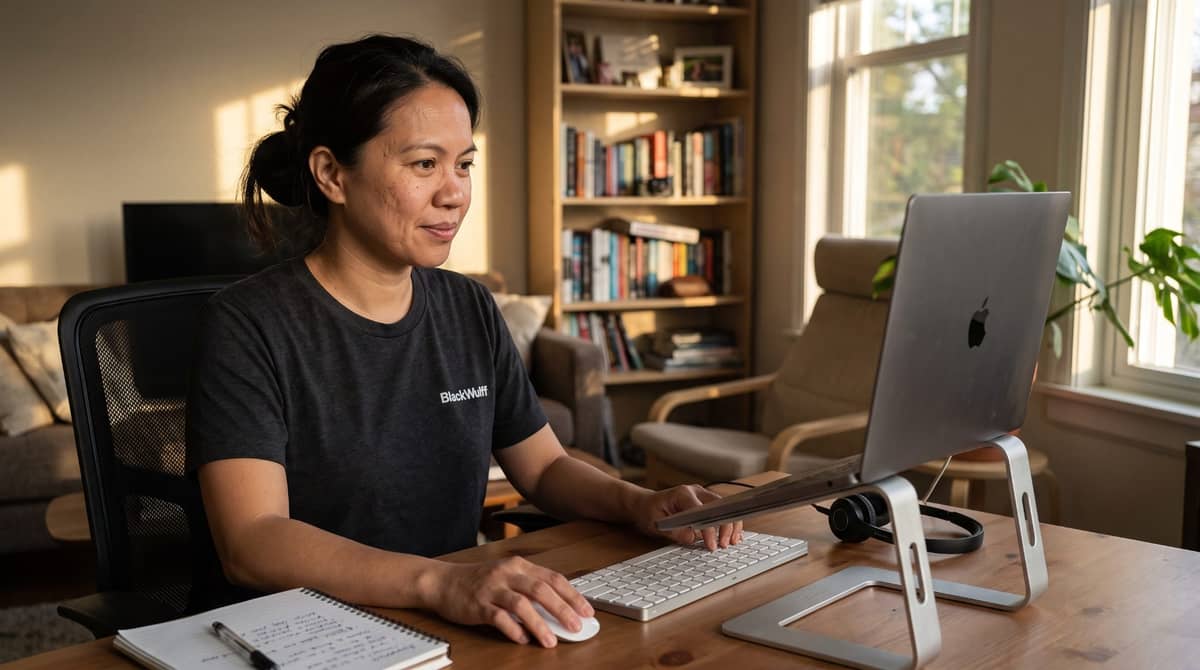
Supervision and surveillance are not the same obligation
A US law firm owes supervision over the work, and no amount of activity logging discharges any part of it. The question the ABA Model Rules put in front of a firm is what work a non-lawyer may perform at all, and whether a lawyer reviewed what came back. Neither of those is answered by a keystroke count. A paralegal who was demonstrably at their desk for eight hours and produced a filing nobody read is a supervision failure with excellent attendance records.
This is where the substitution happens. Monitoring feels like control, so it gets bought instead of review time, which is the scarce thing and the expensive thing. The delegation boundary was never set by where somebody sits, and it is not set by whether their screen was captured every ten minutes either. Buying the cheap thing does not reduce your need for the costly one.
Watch the work instead, and make the work visible
The replacement for surveillance is not trust as a virtue. It is a system where progress is legible without anyone being observed. A queue with owners and dates. Written SOPs, so output can be measured against something. A repository where work lives, so the state of a matter is a thing you look up rather than a thing you ask about. A check-in on a schedule that both people expect.
Where that exists, a screenshot tool tells you nothing you did not already know from the board. Where it does not exist, the tool becomes the only visibility the firm has, which is why it feels indispensable to the firms most dependent on it. A task management system is the floor, and monitoring software installed below that floor is a smoke alarm wired to the stove.
So the honest sequence is to fix visibility first and then decide whether anything else is needed. Usually nothing is. The firms that went straight to the tracker did not catch anybody stealing time. They advertised that they expected it.
People also ask about this
Is screenshot monitoring software worth installing for an offshore hire?
How do I know a remote hire is working if I am not tracking their screen?
Does monitoring software help a firm meet its supervision obligations?
Recommended Readings



Build Your Offshore Team Risk-Free
No upfront cost. Fill roles in 14 days. Pre-vetted, not just pre-screened.